
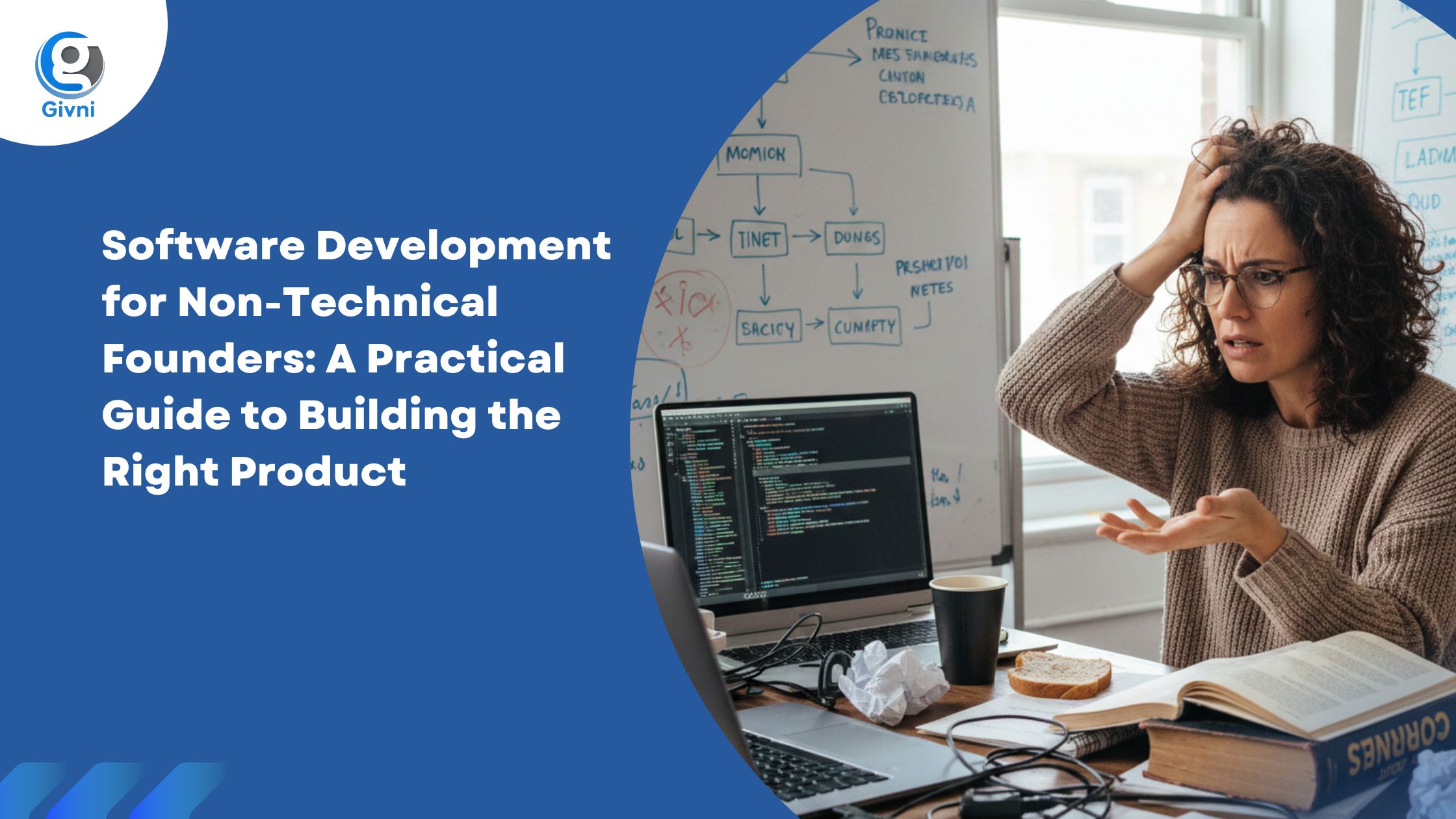
Building a software-driven business without a technical background can feel uncertain at first—and that’s completely normal. You know where you want to go, you understand your customers, and you see the long-term opportunity. The real question is how to turn that vision into a product without losing control or momentum along the way.
This guide is for founders who think in outcomes, not code. It helps you approach software development with clarity, confidence, and a business-first mindset—so every decision supports sustainable growth. With the right approach and the right partner, software stops being a risk and becomes a long-term advantage.
Why Non-Technical Founders Struggle with Software Development
Software development often feels intimidating because it introduces an entirely new language—one filled with unfamiliar terms, complex processes, and decisions that don’t naturally fit into a founder’s everyday experience.
Some of the most common challenges non-technical founders face include:
- Difficulty explaining business requirements to technical teams
- Fear of cost overruns or unclear timelines
- Overbuilt products that don’t match actual user needs
- Dependence on developers for every small change or decision
- Lack of visibility into what’s being built and why
Without the right structure, software projects can drift off course, leaving founders disconnected from the product they set out to build. In fast-growing digital markets, those early decisions matter. A clear, guided approach turns development into a long-term asset—supporting growth, protecting resources, and helping businesses move forward with confidence.
Understanding Software Development Without Technical Jargon
One of the most important realizations for non-technical founders is this:
You do not need to learn programming to build successful software.
What you do need is clarity—clarity about your business problem, your users, and the outcomes you expect from the product.
Successful software development for non-technical founders begins with:
- Problem definition, not feature lists
- User workflows, not technical architecture
- Business outcomes, not code complexity
When conversations focus on business goals instead of technical jargon, founders stay involved and confident. Over time, this clarity leads to smarter decisions and stronger products.
A good development partner translates business intent into technical execution—acting as a bridge between vision and implementation.
The Importance of MVP Thinking for Non-Technical Founders
One of the most effective ways for non-technical founders to stay in control is by adopting MVP (Minimum Viable Product) thinking.
An MVP is not a “small” or “cheap” product—it is a focused product. It includes only the essential features required to solve the core problem and deliver value to users.
For founders, MVP-focused development offers several advantages:
- Validates ideas before large-scale investment
- Reduces risk by avoiding unnecessary features
- Enables faster time-to-market
- Collects real user feedback early
- Allows iterative improvement based on real usage
For startups and SMEs, MVP-driven development is especially valuable. It helps businesses launch quickly, test assumptions in local markets, and refine their product without losing direction or control—especially when working with a startup-focused custom software development.
Instead of guessing what users want, founders learn directly from real-world usage.
Why Local Expertise Matters
Software works best when it fits the real world it serves. By respecting local behaviors, language, and workflows, businesses build solutions that last—earning trust, scaling smoothly, and staying relevant over time.
This is why local expertise matters.
A development partner familiar with business ecosystems brings several advantages:
- Better understanding of local market dynamics
- Awareness of regional customer behavior and expectations
- Clearer communication and cultural alignment
- Faster collaboration and feedback cycles
- Practical solutions aligned with real operational challenges
When developers understand the local context, software feels intuitive and scalable. That insight builds products that grow naturally with the business.
Software Development as a Collaborative Business Process
Non-technical founders often fear losing control once development begins. This usually happens when software is treated as a purely technical task rather than a collaborative business process.
In reality, effective software development should feel like:
- Structured planning, not guesswork
- Clear milestones, not vague timelines
- Ongoing collaboration, not one-time handovers
- Business-driven decisions, not technical assumptions
When founders are involved at key checkpoints—reviewing workflows, approving features, and validating outcomes—they remain in control without needing technical expertise, ensuring that CRM Software Solutions and other business-critical software align perfectly with real operational needs.
Key Things Non-Technical Founders Should Focus On During Development
To stay in control and make informed decisions, non-technical founders should prioritize:
- Clear business objectives: Know what success looks like
- User experience and workflows: Focus on how users interact with the product, especially in Mobile App Development, where usability directly impacts adoption
- Documentation and approvals: Ensure clarity at every stage
- Regular communication checkpoints: Stay aligned throughout development
- Long-term scalability: Think beyond launch toward future growth
By focusing on these areas, founders can guide development confidently—even without technical expertise.
Avoiding Common Pitfalls in Software Development
Many software projects fail not because of poor coding but because of poor planning and alignment.
Non-technical founders should avoid:
- Building too many features too early
- Making assumptions without user validation
- Handing over complete control without checkpoints
- Treating software as a one-time project instead of a long-term asset
A structured process and the right partner help founders avoid these pitfalls and move forward with confidence.
Software Development as a Business Process, Not a Technical Risk
When handled correctly, software development becomes a structured business process rather than a technical challenge, whether the project involves enterprise platforms, customer-facing systems, or news website development initiatives that require scalability, performance, and continuous content delivery.
It becomes:
- A structured business process
- A tool for operational efficiency
- A foundation for long-term growth and scalability
Non-technical founders succeed when they view software not as a technical gamble, but as a strategic investment—one that evolves with the business.
With the right approach, software becomes an enabler rather than a source of stress.
Also read: Website Development Company in Patna
Conclusion: Building Software Without Being Technical Is Possible
You don’t need to code to build great software—just the right process and partner to turn your vision into lasting growth.
For non-technical founders in Patna and Kolkata, partnering with a business-focused team like Givni Pvt Ltd turns software development into a clear, guided journey—one that supports smarter decisions, sustainable growth, and long-term success.
With the right clarity and collaboration, your idea can grow into software that supports your vision—not just today, but as your business evolves.